
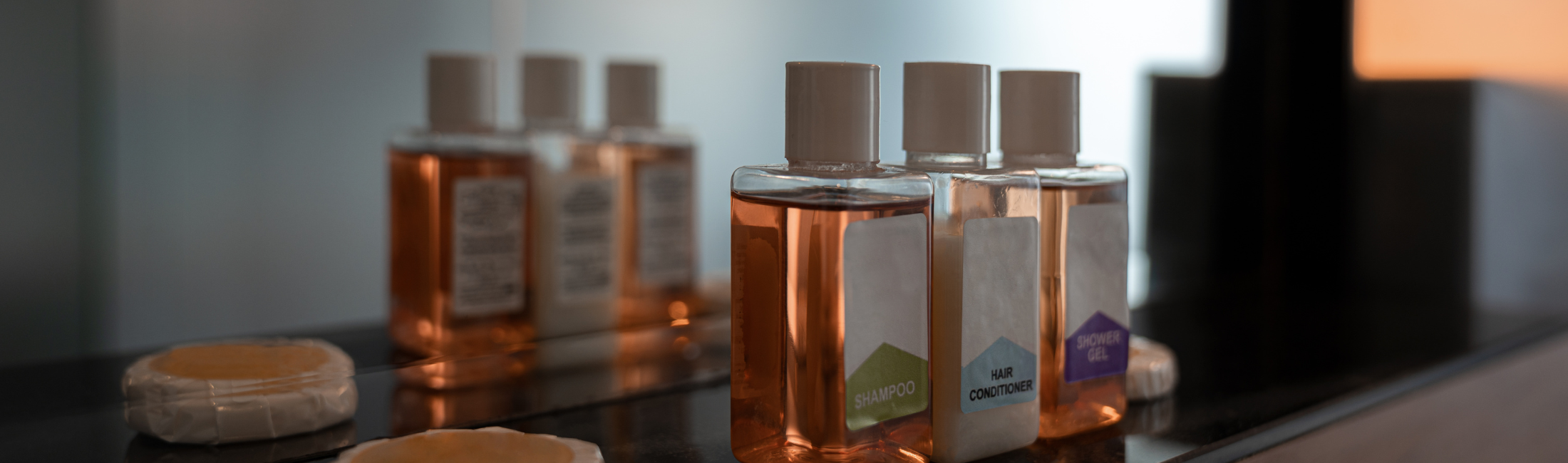
The hospitality sector is undergoing a transformation: starting December 31, 2027 , the European Union will ban the use of single-dose plastic containers in hotels . This new regulation affects shampoo, shower gel, conditioner, and cream bottles smaller than 50 ml for liquids and 100 g for solids, with the aim of drastically reducing plastic waste generated by hospitality facilities.
Many hotels, to anticipate the problem, are already looking for alternative solutions , and a very common practice is to refill dispensers . However, not only will this not be a viable solution under the new legislation, but it is already prohibited by the European Cosmetics Regulation (EC 1223/2009) .
Let's see what will change, why the refill isn't compliant with the law , and what alternatives hotels can adopt to be ready for the transition.
1. Which products will be banned?
EU legislation bans the use of single-use plastic packaging for several hospitality products, including:
✔ Single-dose bottles of shampoo, shower gel, conditioner and creams (less than 50 ml for liquids and less than 100 g for solids)
✔ Disposable sachets for soaps and other cosmetics
✔ Single-use plastic packaging for food products (sugar, sauces, honey, condiments, etc.)
This decision is part of the Packaging and Packaging Waste Regulation (PPWR) , which aims to reduce environmental impact and promote sustainable alternatives.
2. Refilling dispensers is already prohibited by current legislation
Many hotels, in an attempt to reduce the use of plastic, have started replacing single-dose containers with refillable dispensers , unaware that this practice is already prohibited by the European Cosmetic Regulation EC 1223/2009 .
Here's why refilling dispensers is not compliant with the law :
✅ Lack of a controlled environment (GMP - Good Manufacturing Practice)
The Cosmetics Regulation requires that all filling and packaging operations for cosmetic products be carried out in GMP (Good Manufacturing Practices)-certified environments . Refilling in hotels is not done under sterile conditions, increasing the risk of bacterial contamination.
✅ Inability to guarantee the PAO (Period After Opening)
Every cosmetic product has a PAO (Period After Opening) which indicates how long it can be safely used after opening. When refilling, the original PAO is no longer valid because the product is exposed to air and possible contamination.
✅ Container sterility not guaranteed
To comply with regulations, dispenser bottles must be completely sterilized before each refill , a process that cannot be guaranteed in a hotel. This increases the risk of bacterial growth and potential safety issues for guests.
🚨 Many hotels are unknowingly violating the current law . With the new regulation, in addition to plastic single-dose containers, it will also be essential to eliminate refillable dispensers to avoid the risk of non-compliance.
3. What are the compliant and sustainable alternatives?
To comply with regulations and avoid health and hygiene issues, hotels must adopt safe and sustainable solutions . Among the best options are:
✅ Single-dose solid cosmetics
Shampoos, conditioners, body washes, and creams in solid form , packaged in compostable or recyclable materials . These products offer a premium experience , reduce waste, and ensure maximum hygiene.
✅ Individual formats in plastic-free packaging
Using aluminum packaging, FSC-certified paper, or compostable bioplastics , which comply with regulations without generating plastic waste.
✅ Biodegradable single-dose containers
Innovative water-soluble or biodegradable packaging, which does not require disposal and guarantees minimal environmental impact.
💡 Single-dose solid cosmetics represent the best alternative , as they eliminate plastic without compromising hygiene and regulatory compliance.
4. Why is it worth complying now?
Complying with the new regulations is not only mandatory, but also an opportunity for hotels that want to stand out and attract an increasingly sustainability-conscious clientele.
✔ Improves brand reputation – A hotel that eliminates plastic and offers eco-friendly solutions is perceived as innovative and responsible.
✔ Reduced disposal costs – Less plastic means less waste to manage and reduced operating costs.
✔ Customer loyalty – Modern travellers are increasingly looking for properties that adopt sustainable and safe solutions.
🔍 According to Booking.com, 81% of global travelers prefer to stay in eco-friendly accommodations .
5. How to prepare for the transition?
To be ready for the regulations to come into force in 2027, hotels must act now . Here's what to do:
✅ Select suppliers of solid cosmetics and plastic-free packaging
✅ Gradually eliminate single-dose plastic containers and introduce alternative formats
✅ Train staff on new product management methods
✅ Communicate the change to guests , highlighting the hotel's environmental commitment
🌱 Switching to sustainable solutions today means being ready for the future and having a competitive advantage!
Conclusion
The ban on single-serve plastic containers in hotels represents a crucial step for the hospitality industry. With refills already prohibited by current regulations , hotels must find safe and compliant alternatives .
Single-dose solid cosmetics are the most effective solution for complying with the law, ensuring hygiene, and reducing environmental impact.
🚀 The future of hospitality is plastic-free: get ready to adopt the best solution for your hotel!

How to best display products to maximize sales in your store